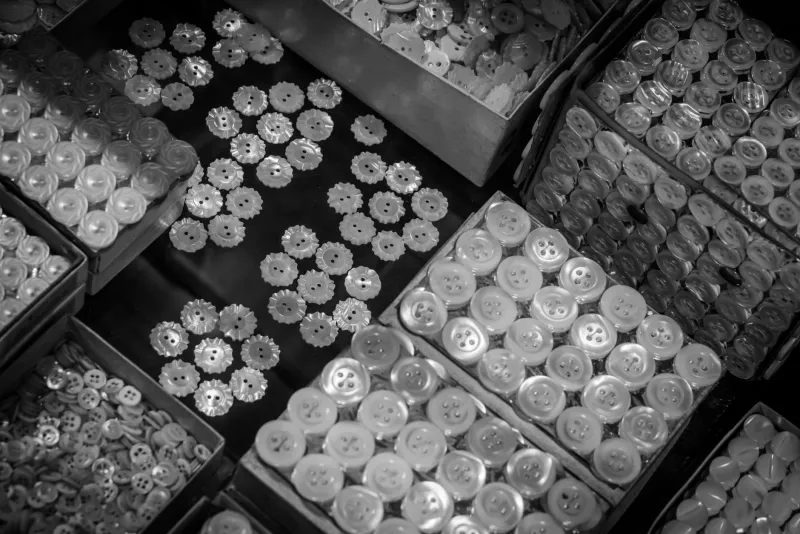
Five by Five, All From the Scrap Bag: A Winter Stitching Game for the Whole Family
There is a particular kind of November Saturday in the UK. The window is grey, the garden is soggy, someone has already watched their third episode of something, and the biscuit tin is looking dangerously empty. This is the exact moment a grid of squares comes into its own.
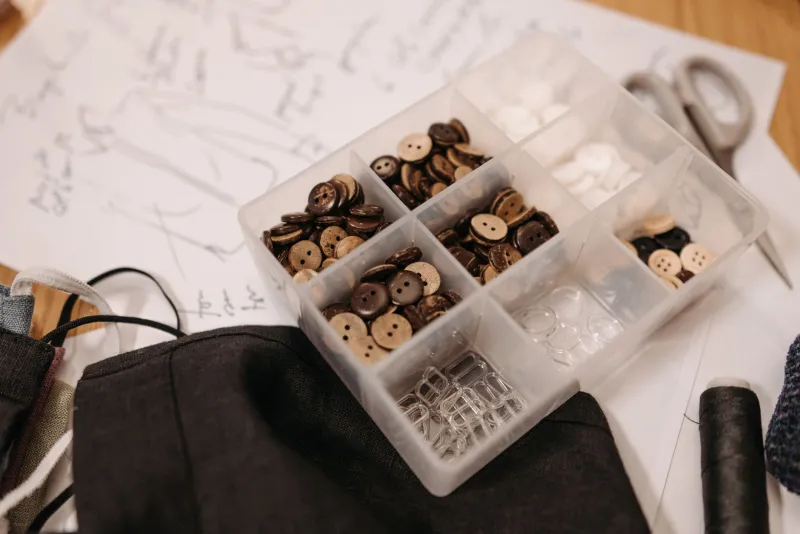
Stitch bingo works because it asks almost nothing of you. No trip to the craft shop, no printing in colour, no special kit. You need a scrap basket, a needle or two, and a handful of buttons to use as counters. Everything else is already sitting in the tin at the back of the cupboard.
The idea in a nutshell
Each player gets a 5x5 grid. Every square holds one small, finishable hand-sewing job — a button, a patch, a mend, a line of running stitch. Cover a completed square with a button. First to a full line wins the round. It is bingo, but the calling is done by whoever shouts "done!" first.
The clever bit is that the tasks are deliberately tiny. We are not asking anyone to make a tote bag between two and four o'clock. A square should take somewhere between ninety seconds and ten minutes. That keeps the pace bouncy and means a child with a short attention span can still tick something off before the hot chocolate arrives.
Building your card — and the stash-only rule
Before you start, empty the scrap basket onto the table and agree one house rule out loud: every square must be completed using only what is already on the table. No rummaging in the sewing box for the good thread, no nipping out for interfacing. It is the rule that makes the whole thing work, and it stops the afternoon turning into a shopping trip.
Here is a card we like. Shuffle the squares so no two players have the same layout — half the fun is the squabble over who got the easy ones.
| Sew on a two-hole button | Three-stitch mend on a hole | Running stitch border on a scrap patch | Sew a felt star | Thread a needle, knot the end |
| Fix a loose hem (five stitches) | Make a button-stack flower | 10cm of backstitch | Whip stitch a felt leaf | Cut five 5cm fabric squares |
| Stitch your initials | Sew a patch onto something | FREE SQUARE — teach someone a stitch | Attach a ribbon loop | Overstitch a frayed edge |
| Sew an X with four-hole button | Sew two buttons back to back | Make a scrap bookmark | Sew a tiny pocket on | Join two scraps with a straight seam |
| Add a fabric label or tag | Sew on a hook and eye | Cross stitch on scrap fabric | Tie off and hide the knot | Sew a snap fastener |
Twenty-five jobs, and every single one of them uses up something that was otherwise heading for the bin. The three-stitch mend is our favourite: it is barely mending at all, just three passes of thread over a small hole, and yet a jumper lives to see another winter because of it. Multiply that by the number of people at the table and you have quietly saved a decent pile of clothes from the rag bag.
Making it fair for mixed ages
A seven-year-old and a forty-something are not going to compete on equal terms, and pretending otherwise ends in tears. We use a simple dot system instead.
One dot (little stitchers, roughly 5–8): threading, cutting squares, sewing a two-hole button, running stitch, the free square. Two dots (growing stitchers, 9–12): backstitch, whip stitch, joining seams, hook and eye. Three dots (grown-ups and confident teens): the mends, the frayed edges, anything involving a knot that has to be hidden.
Mark the dots in the corner of each square before you print. Little ones play for a line of five one-dot squares. Grown-ups need a line containing at least two three-dot squares. Everyone is playing the same grid, nobody is being patronised, and the youngest at the table is genuinely in with a chance.
Do keep an eye on needles. Under-eights are usually happier with a plastic or tapestry needle and a bit of blunt-nosed supervision, and the free square — teach someone a stitch — is a lovely way to make that supervision feel like a job rather than a hover.
House rules that keep the peace
- Rounds, not marathons. Forty-five minutes, then a biscuit break, then a second round if the mood is still there.
- Buttons as counters. Use whatever is in the tin — the mismatched ones, the ones with no partner, the one that looks like a tiny tomato.
- Shout bingo, not silence. The noise is part of it.
- Nobody finishes anybody else's square. If a stitch is abandoned halfway, it can sit there until the next round.
- Mess is fine. Offcuts go back in the basket, not on the floor, and that is the only tidying rule we enforce.
Small prizes, big feelings
You do not need to buy anything for this, which is rather the point. A few ideas that have gone down well:
Stitch a felt rosette in five minutes and pin it on the winner — Keeper of the Button Jar for the round, handed over at the end of the afternoon. Award a Mender's Badge to whoever did the neatest hidden knot. Let the winner choose the next film. Give out the leftover fabric squares as a "prize" and watch them get sewn into something else by Tuesday.
And if the whole game falls apart twenty minutes in because someone would rather make a cape for the dog, that is also a perfectly good outcome. The scraps got used, the needles came out, and nobody mentioned the weather once.
A note on printing
Print the grid on ordinary A4, one per player, and keep a spare or two for guests. If you have no printer, draw the grid on the back of an envelope with a ruler — honestly, it works just as well, and the slightly wonky lines set the tone nicely.