The Cuddle Ward: Opening a Gentle Soft-Toy Mending Clinic at Home
There is a particular kind of sadness in a child's face when a favourite bunny goes floppy at the neck, or a much-loved bear starts leaking stuffing from a seam. The good news? Most soft-toy injuries are beautifully fixable at home, and the fixing itself can become a lovely shared activity. Welcome to the Cuddle Ward: a gentle, playful soft-toy mending clinic where the waiting room is the kitchen table and the staff are wearing pyjamas.
At Stitch Play, we are firm believers that easy stitches make happy makers — and that includes small makers who are learning that beloved things can be cared for rather than replaced. You do not need a sewing machine, a formal pattern or any prior experience. A basic needle, thread and a bit of patience will do nicely.
Set up the Cuddle Ward
Choose a bright, clear table and lay out a clean tea towel as your clinic mat. Add a few small baskets or jam jars for tools, and a little stack of scrap fabric for patches. If you want to lean into the game, make simple paper wristbands for each toy and write their name on them. A toy may arrive with a 'wobbly arm' or a 'tummy seam opening'; the wristband helps everyone remember what needs attention.
Keep the mood light. This is not a formal repair service, and nothing needs to be perfect. In fact, a visible patch or a cheerful row of stitches often adds character. Think of it as a tiny textile story: this bear has been loved, and here is the proof.
Toy triage, without scary clipboards
Before you thread a needle, take a gentle look at the patient. Most soft-toy problems fall into three friendly categories:
- Wobbly limbs: an arm or leg has come loose at the seam.
- Worn patches: fabric has thinned, gone bobbly or developed a small hole.
- Escaped stuffing: a seam has split and filling is peeking out.
For wobbly limbs, check whether the fabric itself is sound. If the seam has simply come apart, you can usually stitch it back. If the fabric is crumbling or the joint is badly torn, a small fabric patch behind the area will give the stitches something stronger to hold on to.
For worn patches, choose a patch fabric that is similar in weight to the toy. Cotton, jersey from an old T-shirt, soft felt or a piece of clean bedsheet all work well. Avoid anything scratchy or loosely woven. For escaped stuffing, gather the escaping filling gently and check that it is clean. Use proper toy filling — the CE-marked polyester kind — rather than rice, beans or household scraps. If the toy is very old and the filling looks grubby or damp, it is kinder to replace it entirely with fresh toy filling.
Your tiny toolkit
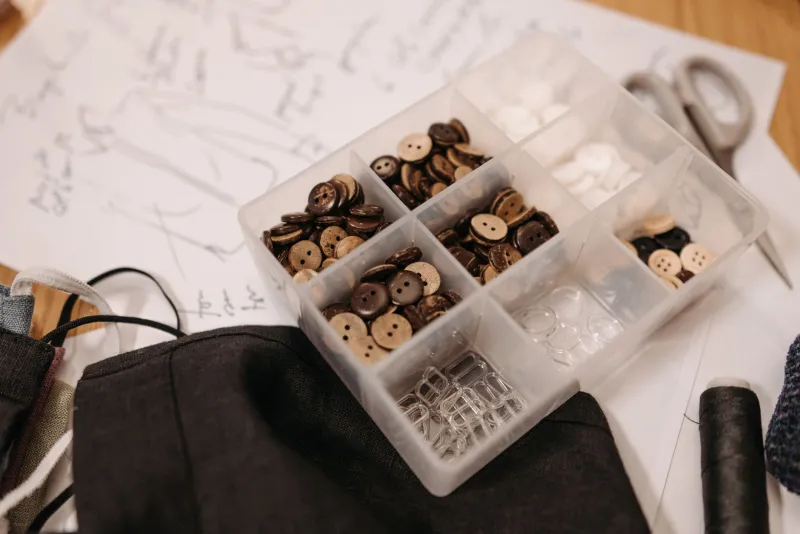
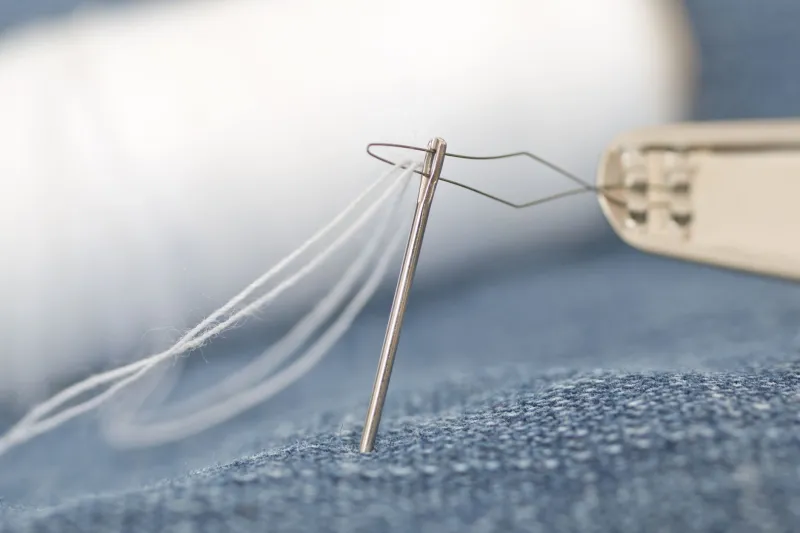
You do not need much. A small sharp needle, a reel of strong all-purpose thread, a couple of pins, small scissors and a handful of fabric scraps will see you through most clinic sessions. A thimble is optional, but useful if little fingers are helping to push a needle through thick fabric. Keep a seam ripper or small snips nearby for tidy ends.
For children, consider a blunt tapestry needle and embroidery thread for practice stitches on scrap fabric. It is much easier to learn the rhythm of a running stitch on a piece of old cotton than on a beloved toy. Once they are comfortable, they can help with simple tasks: choosing a patch, holding the toy steady, passing the needle through a pre-started hole, or gently pushing stuffing into a corner.
Stitches for wobbly limbs and split seams
The ladder stitch is the quiet hero of soft-toy repair. It closes a seam invisibly, which is lovely for a toy's face or tummy. Bring the needle up along one side of the opening, then across to the other side, taking tiny horizontal bites. Pull gently as you go and the seam will close like a little ladder being folded away. Finish with a small knot and bury the thread end inside the toy.
A whip stitch is quicker and works well for attaching a patch or closing a seam that does not need to be invisible. Work small stitches over the edge, keeping them close together so the stuffing stays inside. A running stitch is perfect for children to practise and for adding a decorative line around a patch. If a limb is very wobbly, stitch around the base twice for extra strength, then add a small patch behind the joint if the fabric feels thin.
Patches with personality
This is where the Cuddle Ward becomes properly joyful. Let the child choose the patch fabric from the scrap basket. A star print, a leftover piece of a favourite outgrown shirt, or a bright felt heart can turn a repair into a badge of honour. Cut the patch slightly larger than the hole, turn under the raw edges if the fabric frays, and pin it in place. Use a whip stitch or small running stitch around the edge.
For a really characterful finish, add a few embroidery stitches: a little smile, a star, a tiny flower. Keep it simple. The aim is not perfection but personality. A patch that says 'this toy is loved and cared for' is far better than a repair that looks invisible but was stressful to make.
Let the kids take the lead, safely
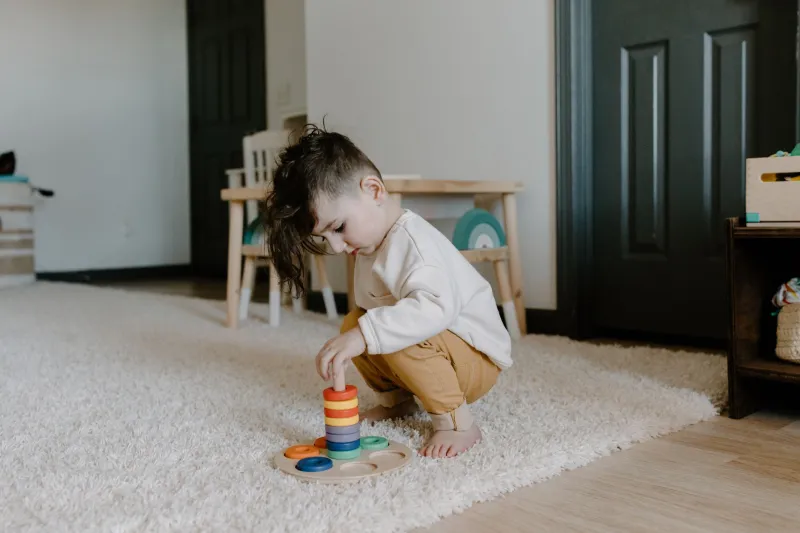
Children can be wonderful menders when the setup is right. Give them real choices — which patch, which thread colour, which toy gets seen first — and let them do the gentle parts. Supervise closely with sharp needles, and keep pins in a small magnetic dish or a jam jar with a lid. For very young children, skip the needle entirely and let them help with stuffing, choosing patches or drawing a 'repair plan' on paper.
Talk about what you are doing as you go. 'We are making tiny stitches so the stuffing stays in.' 'This patch will make the worn bit stronger.' That running commentary builds confidence and turns mending into a normal, positive skill rather than a chore.
Discharge day
When the toy is mended, give it a gentle squeeze, check that all stuffing is inside and that no pins are left behind. A quick comb-through of the seam with your fingers is a good final check. Then hold a tiny discharge ceremony: a sticker, a hug, a cup of tea for the grown-ups. The toy goes back to its person, patched and proud.
The Cuddle Ward will not stay open forever — but the message will. Toys can be repaired. Small hands can help. And a few easy stitches can turn a sad, floppy bunny into a beloved friend with a story to tell.