Wonky Is Welcome: The Case for Imperfect Stitching
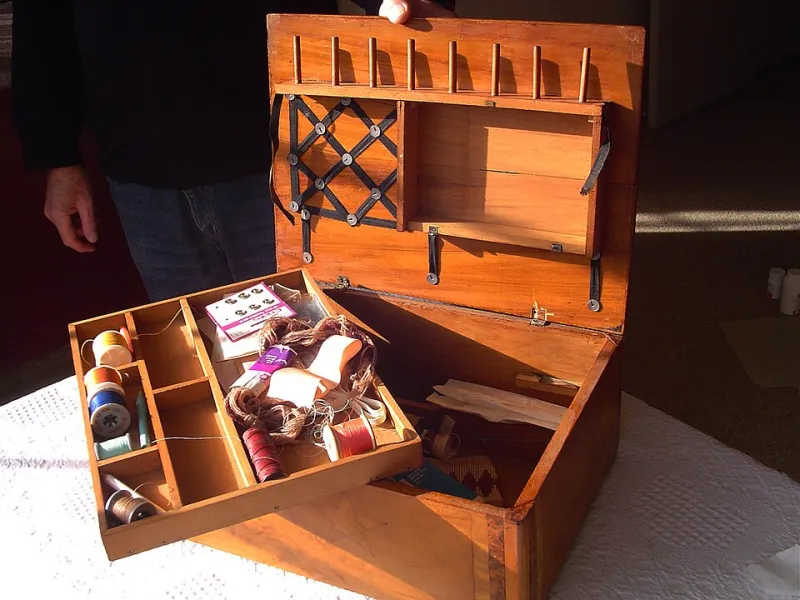
Photo: MichalPL, CC BY-SA 4.0, via Wikimedia Commons
I have a confession: some of my favourite things I have ever made are also some of the wonkiest. There is a lavender bag with a seam that veers off like a distracted bus. A patched knee on my old jeans where the stitches look like a five-year-old drew them with a felt tip. A little felt bookmark that is, frankly, more rhombus than rectangle. I love them all.
That is not because I have given up on doing things well. It is because I have stopped believing that neatness is the entry fee for enjoying sewing. If you are a beginner in the UK staring at a pile of fabric and feeling sick about French seams and perfectly matched corners, this is your permission slip to make a mess first and learn as you go.
The Tyranny of the Perfect Seam
Somewhere between the Great British Sewing Bee and the beautifully filtered sewing accounts on Instagram, we have decided that beginner sewing should look like advanced sewing. That is a bit like saying you should be able to run a marathon before you have enjoyed a walk to the shop.
Neat finishing is a skill. It comes with practice, better tools and a lot of repetition. It is not a personality test. When you chase perfection from day one, every wobbly line feels like evidence that you are not a sewing person. But sewing is not a talent you either have or do not have. It is a set of small physical habits, and habits grow through doing.
What Wobbly Seams Actually Teach You
A wobbly seam teaches you where your needle is going. A puckered hem teaches you about thread tension. A slightly crooked patch teaches you that fabric moves, and that you can move with it. These are not failures; they are feedback.
There is also something quietly radical about visible stitching in a world of flawless shop-bought things. A hand-sewn line shows effort. It shows time. It shows that a person sat down with a needle and thought about you. That is worth more than a millimetre-perfect seam any day.
Play matters, too. When you are not terrified of ruining the fabric, you experiment. You try a contrast thread. You patch a pocket at an angle. You discover that blanket stitch is actually quite nice once you stop gripping the needle like a chip shop fork. Play is how confidence sneaks up on you.
The Imperfect Patch Challenge
Here is a small challenge for this week. It takes about half an hour and one scrap of fabric.
- Find a scrap roughly 8cm square and a garment or bag that needs a bit of character — old jeans, a plain tote, a slightly worn shirt.
- Cut a patch shape. It does not need to be a square. A rough oval or wonky heart is excellent.
- Pin or clip it in place. Choose a thread that makes you smile.
- Stitch around the edge with running stitch or whip stitch. Do not unpick. Do not redraw. Let the line be visibly hand-made.
- Wear it or use it this week. Notice how often you think about the wobble. Usually, it is far less than you expect.
The rule is simple: no seam ripper unless the patch is actually falling off. You are not aiming for invisible. You are aiming for done.
Neat Finishing Can Wait
None of this means you should never learn to finish neatly. It means you do not have to learn everything at once. Start with projects that forgive: tote bags, cushion covers, simple pouches, patched knees, felt decorations. Use busy prints if you feel self-conscious. Use thread that matches if you want mistakes to blend in. Then, when you are ready, try a backstitch seam or a French seam on a project where the stakes feel low.
A seam ripper is a tool, not a punishment. Keep it nearby, use it when a seam genuinely needs fixing, and then move on. Do not let it become the little voice that tells you every line is wrong.
A Permission Slip for UK Makers
So here it is, in plain English: your stitching does not have to be perfect to be worthwhile. Your wobbly seams are allowed. Your visible mends are allowed. Your first attempt is allowed to look like a first attempt.
Put the kettle on, find a scrap, and make something small and slightly wonky. That is Stitch Play. Easy stitches, happy makers — and absolutely no French seams required before tea.